1. What Is a PHP Program and Who Is It For?
  2. What Is a Typical Day in a PHP Program at Arkview?
    1. Morning Arrival and Check-In
    2. Morning Clinical Groups
    3. Individual Therapy and Case Management
    4. Lunch
    5. Afternoon Groups and Specialized Programming
    6. End-of-Day Wrap-Up
  3. What Makes Arkview’s PHP Different?
  4. Frequently Asked Questions
    1. How many hours a day is a PHP program?
    2. Can I attend PHP and still live at home?
    3. What is the difference between PHP and IOP?
    4. Can PHP treat addiction and mental health conditions at the same time?
    5. What should I bring on my first day of PHP?

Unfamiliar environments are harder to walk into. Predictable ones are easier. If you or someone you love is considering a partial hospitalization program (PHP), a clear picture of how a treatment day actually unfolds can make the difference between hesitation and taking the first step.
PHP sits at one of the most consequential levels of addiction and mental health care. It is intensive enough to provide real clinical structure, yet flexible enough to let participants return home each evening. At Arkview Behavioral Health, the partial hospitalization program is built around a consistent daily rhythm of group therapy, individual sessions, evidence-based skill development, and clinical support, typically running five to six hours per day, five days a week.

What Is a PHP Program and Who Is It For?

A partial hospitalization program is a structured form of outpatient care that provides clinical treatment for several hours each day while participants return home or to a sober living environment each evening. It sits between residential treatment, where individuals live on-site around the clock, and the intensive outpatient program (IOP), which typically requires fewer weekly hours.
PHP is appropriate for people who have completed a medical detox or residential stay and need continued clinical support, who are managing co-occurring mental health and substance use disorders, or who have a stable home environment but require more structure than standard outpatient care provides.

What Is a Typical Day in a PHP Program at Arkview?
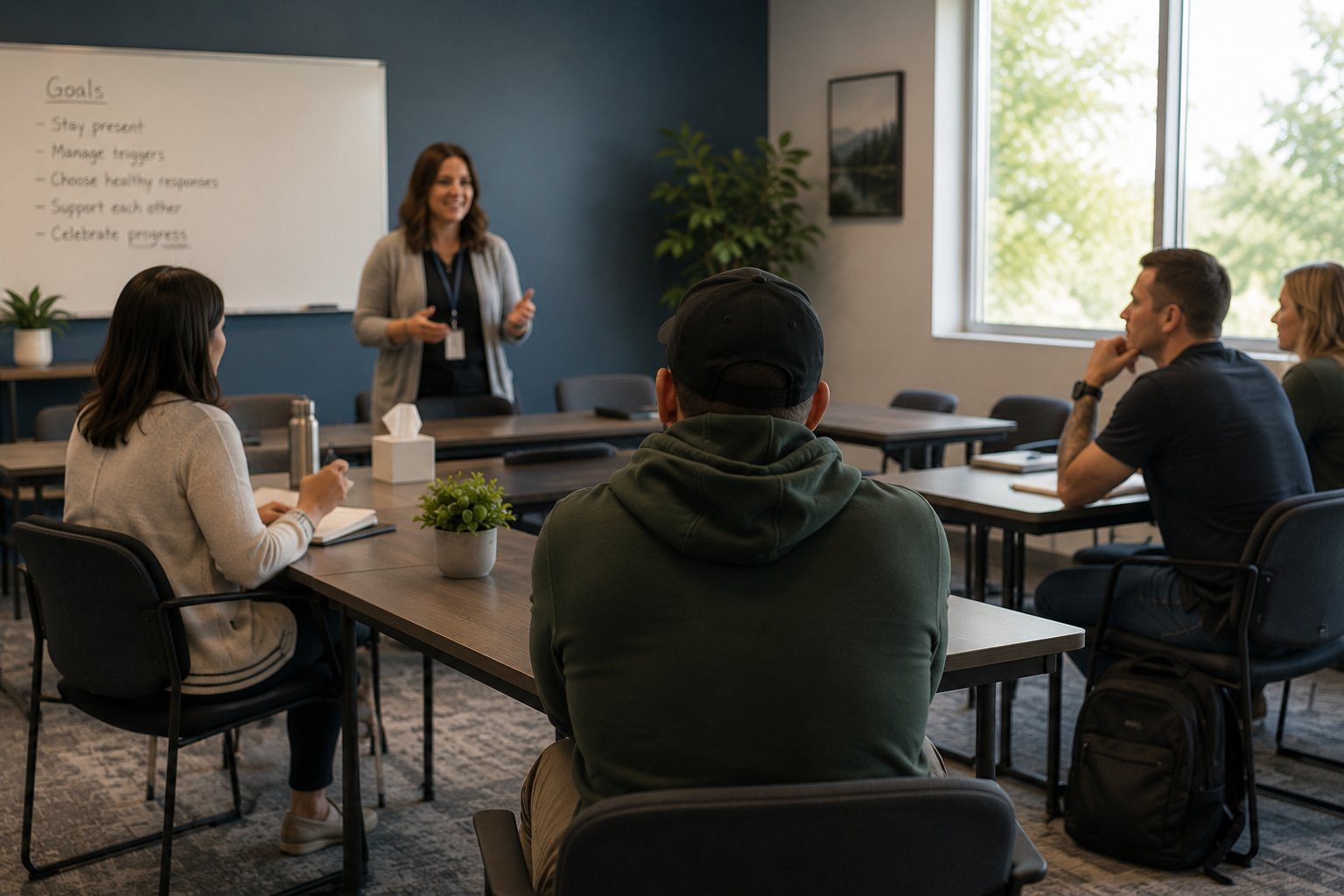
Group therapy session during a PHP day at Arkview Behavioral Health

PHP days at Arkview are structured but not rigid. The schedule adjusts based on individual treatment plans, but most participants follow a consistent framework from morning arrival through afternoon discharge.

Morning Arrival and Check-In

The day begins with arrival and a facilitated check-in group. This is a short, structured opening that helps participants settle before clinical work begins. Staff gauge where each person is emotionally, note anything significant from the previous evening, and set the tone for the day ahead.

Morning Clinical Groups

After check-in, participants move into the first block of group therapy. Arkview’s PHP incorporates evidence-based modalities including cognitive behavioral therapy (CBT) and dialectical behavior therapy (DBT). A CBT-focused group might work through thought records, identifying distorted thinking patterns and replacing them with more grounded responses. A DBT-oriented session might focus on distress tolerance or interpersonal effectiveness.
Psychoeducation groups round out the morning schedule. Topics include how addiction affects brain chemistry, what co-occurring disorders look like in daily life, and how stress activates relapse risk. The format is educational without being a lecture.

Individual Therapy and Case Management

At some point during the day (often mid-morning or directly after lunch), participants meet one-on-one with a licensed therapist. These sessions track progress, refine treatment goals, and address anything that surfaced in group that needs more privacy to explore.
Case management appointments are scheduled as needed. These handle the practical architecture of recovery: connecting with sober housing resources, coordinating with family, navigating insurance questions, or planning the eventual transition to a lower level of care.

Lunch

A break for lunch is built into the PHP schedule. The mid-day pause serves a real clinical function ranging from rest to informal peer connection to a moment outside the sustained focus of group work. Recovery doesn’t only happen in therapy rooms.

Afternoon Groups and Specialized Programming

Afternoon sessions shift in focus. Process groups, where participants reflect on their own experiences and offer feedback to peers, are common in this block. These sessions build both accountability and empathy, often at the same time.
Depending on the day and individual treatment plan, afternoons may also include:

  • Trauma-informed therapy: Arkview offers trauma treatment and EMDR for participants with a trauma history, which may be incorporated into the afternoon schedule.
  • Family therapy: Scheduled sessions that bring in family members or support people, focused on rebuilding communication and trust.
  • Holistic programming: Expressive therapies including art, music, yoga, drum circle, and experiential therapy support emotional regulation beyond traditional talk-based modalities.
  • Medication-assisted treatment (MAT) coordination: For individuals managing opioid use disorder or other conditions where MAT is part of the plan, medication management appointments may be woven into this block.

End-of-Day Wrap-Up

Before participants leave, a closing group helps everyone check out, acknowledge what was accomplished, and set intentions for the evening ahead. Staff use this time to identify anyone who may need additional support before transitioning home. The handoff from structured programming to an unsupported evening is a recognized vulnerability in early recovery, and the end-of-day structure is designed specifically to make it safer.

What Makes Arkview’s PHP Different?

Structure is only as useful as the people who deliver it. At Arkview, PHP participants work with licensed clinicians and therapists, several of whom are in long-term recovery themselves. That lived experience shapes the way care is communicated.
Arkview’s dual diagnosis programming is fully integrated into the PHP. A person managing depression alongside alcohol use disorder receives one coordinated plan that addresses both conditions simultaneously. SAMHSA research consistently shows that treating substance use in isolation when a co-occurring mental health condition is present produces significantly worse outcomes.
Arkview also accepts a wide range of insurance, including VA CCN and Tricare for veterans, and offers online insurance verification. If you or someone you love is ready to take the next step, Arkview’s intake team can walk you through what to expect, what insurance will cover, and what to bring on day one.

Frequently Asked Questions

How many hours a day is a PHP program?

Most partial hospitalization programs run five to six hours per day, Monday through Friday. Arkview’s PHP follows this structure, with group therapy, individual sessions, and clinical support built into each day. Total weekly hours are generally higher than IOP but lower than residential treatment.

Can I attend PHP and still live at home?

Yes. PHP is an outpatient level of care. Participants return home or to a sober living environment each evening. A stable, supportive home environment is typically a prerequisite. If that isn’t in place, Arkview’s clinical team can discuss whether residential treatment or structured sober living would be a better starting point.

What is the difference between PHP and IOP?

A partial hospitalization program requires more hours per week and provides a higher level of clinical oversight than an intensive outpatient program (IOP). IOP is typically the next step down after PHP as a person stabilizes and builds greater confidence managing recovery independently. Arkview offers both levels of care to support a smooth, coordinated continuum.

Can PHP treat addiction and mental health conditions at the same time?

Yes. Arkview’s PHP integrates fully with its dual diagnosis programming, meaning co-occurring substance use and mental health conditions are treated within a single coordinated care plan. Research from the Substance Abuse and Mental Health Services Administration (SAMHSA) consistently supports this integrated approach as producing better long-term outcomes.

What should I bring on my first day of PHP?

Bring a valid photo ID, your insurance card, and any prescribed medications in their original containers. Comfortable clothing is recommended. Arkview’s admissions team will walk you through any additional requirements during the intake process. They’re there to make the first day as manageable as possible.


Accessibility Toolbar

A Typical Day in a PHP Program at Arkview

  1. What Is a PHP Program and Who Is It For?
  2. What Is a Typical Day in a PHP Program at Arkview?
    1. Morning Arrival and Check-In
    2. Morning Clinical Groups
    3. Individual Therapy and Case Management
    4. Lunch
    5. Afternoon Groups and Specialized Programming
    6. End-of-Day Wrap-Up
  3. What Makes Arkview's PHP Different?
  4. Frequently Asked Questions
    1. How many hours a day is a PHP program?
    2. Can I attend PHP and still live at home?
    3. What is the difference between PHP and IOP?
    4. Can PHP treat addiction and mental health conditions at the same time?
    5. What should I bring on my first day of PHP?

Unfamiliar environments are harder to walk into. Predictable ones are easier. If you or someone you love is considering a partial hospitalization program (PHP), a clear picture of how a treatment day actually unfolds can make the difference between hesitation and taking the first step.
PHP sits at one of the most consequential levels of addiction and mental health care. It is intensive enough to provide real clinical structure, yet flexible enough to let participants return home each evening. At Arkview Behavioral Health, the partial hospitalization program is built around a consistent daily rhythm of group therapy, individual sessions, evidence-based skill development, and clinical support, typically running five to six hours per day, five days a week.

What Is a PHP Program and Who Is It For?

A partial hospitalization program is a structured form of outpatient care that provides clinical treatment for several hours each day while participants return home or to a sober living environment each evening. It sits between residential treatment, where individuals live on-site around the clock, and the intensive outpatient program (IOP), which typically requires fewer weekly hours.
PHP is appropriate for people who have completed a medical detox or residential stay and need continued clinical support, who are managing co-occurring mental health and substance use disorders, or who have a stable home environment but require more structure than standard outpatient care provides.

What Is a Typical Day in a PHP Program at Arkview?

Group therapy session during a PHP day at Arkview Behavioral Health

PHP days at Arkview are structured but not rigid. The schedule adjusts based on individual treatment plans, but most participants follow a consistent framework from morning arrival through afternoon discharge.

Morning Arrival and Check-In

The day begins with arrival and a facilitated check-in group. This is a short, structured opening that helps participants settle before clinical work begins. Staff gauge where each person is emotionally, note anything significant from the previous evening, and set the tone for the day ahead.

Morning Clinical Groups

After check-in, participants move into the first block of group therapy. Arkview's PHP incorporates evidence-based modalities including cognitive behavioral therapy (CBT) and dialectical behavior therapy (DBT). A CBT-focused group might work through thought records, identifying distorted thinking patterns and replacing them with more grounded responses. A DBT-oriented session might focus on distress tolerance or interpersonal effectiveness.
Psychoeducation groups round out the morning schedule. Topics include how addiction affects brain chemistry, what co-occurring disorders look like in daily life, and how stress activates relapse risk. The format is educational without being a lecture.

Individual Therapy and Case Management

At some point during the day (often mid-morning or directly after lunch), participants meet one-on-one with a licensed therapist. These sessions track progress, refine treatment goals, and address anything that surfaced in group that needs more privacy to explore.
Case management appointments are scheduled as needed. These handle the practical architecture of recovery: connecting with sober housing resources, coordinating with family, navigating insurance questions, or planning the eventual transition to a lower level of care.

Lunch

A break for lunch is built into the PHP schedule. The mid-day pause serves a real clinical function ranging from rest to informal peer connection to a moment outside the sustained focus of group work. Recovery doesn't only happen in therapy rooms.

Afternoon Groups and Specialized Programming

Afternoon sessions shift in focus. Process groups, where participants reflect on their own experiences and offer feedback to peers, are common in this block. These sessions build both accountability and empathy, often at the same time.
Depending on the day and individual treatment plan, afternoons may also include:

  • Trauma-informed therapy: Arkview offers trauma treatment and EMDR for participants with a trauma history, which may be incorporated into the afternoon schedule.
  • Family therapy: Scheduled sessions that bring in family members or support people, focused on rebuilding communication and trust.
  • Holistic programming: Expressive therapies including art, music, yoga, drum circle, and experiential therapy support emotional regulation beyond traditional talk-based modalities.
  • Medication-assisted treatment (MAT) coordination: For individuals managing opioid use disorder or other conditions where MAT is part of the plan, medication management appointments may be woven into this block.

End-of-Day Wrap-Up

Before participants leave, a closing group helps everyone check out, acknowledge what was accomplished, and set intentions for the evening ahead. Staff use this time to identify anyone who may need additional support before transitioning home. The handoff from structured programming to an unsupported evening is a recognized vulnerability in early recovery, and the end-of-day structure is designed specifically to make it safer.

What Makes Arkview's PHP Different?

Structure is only as useful as the people who deliver it. At Arkview, PHP participants work with licensed clinicians and therapists, several of whom are in long-term recovery themselves. That lived experience shapes the way care is communicated.
Arkview's dual diagnosis programming is fully integrated into the PHP. A person managing depression alongside alcohol use disorder receives one coordinated plan that addresses both conditions simultaneously. SAMHSA research consistently shows that treating substance use in isolation when a co-occurring mental health condition is present produces significantly worse outcomes.
Arkview also accepts a wide range of insurance, including VA CCN and Tricare for veterans, and offers online insurance verification. If you or someone you love is ready to take the next step, Arkview's intake team can walk you through what to expect, what insurance will cover, and what to bring on day one.

Frequently Asked Questions

How many hours a day is a PHP program?

Most partial hospitalization programs run five to six hours per day, Monday through Friday. Arkview's PHP follows this structure, with group therapy, individual sessions, and clinical support built into each day. Total weekly hours are generally higher than IOP but lower than residential treatment.

Can I attend PHP and still live at home?

Yes. PHP is an outpatient level of care. Participants return home or to a sober living environment each evening. A stable, supportive home environment is typically a prerequisite. If that isn't in place, Arkview's clinical team can discuss whether residential treatment or structured sober living would be a better starting point.

What is the difference between PHP and IOP?

A partial hospitalization program requires more hours per week and provides a higher level of clinical oversight than an intensive outpatient program (IOP). IOP is typically the next step down after PHP as a person stabilizes and builds greater confidence managing recovery independently. Arkview offers both levels of care to support a smooth, coordinated continuum.

Can PHP treat addiction and mental health conditions at the same time?

Yes. Arkview's PHP integrates fully with its dual diagnosis programming, meaning co-occurring substance use and mental health conditions are treated within a single coordinated care plan. Research from the Substance Abuse and Mental Health Services Administration (SAMHSA) consistently supports this integrated approach as producing better long-term outcomes.

What should I bring on my first day of PHP?

Bring a valid photo ID, your insurance card, and any prescribed medications in their original containers. Comfortable clothing is recommended. Arkview's admissions team will walk you through any additional requirements during the intake process. They're there to make the first day as manageable as possible.

Other articles you may be interested:

Table of Contents
Scroll to Top